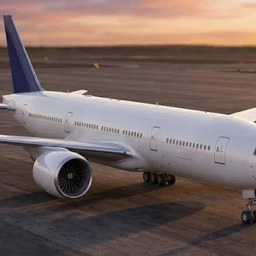
The four forces
In steady, unaccelerated flight lift equals weight and thrust equals drag. Change one and the aircraft accelerates along that axis until a new balance is found. Every performance discussion — climb, cruise, glide — is really a discussion about how those four forces are traded against each other.
Angle of attack rules everything
Lift depends on the angle between the chord line and the relative airflow, on dynamic pressure (density and the square of airspeed) and on wing area. A wing always stalls at the same critical angle of attack — roughly 15-16 degrees on a typical trainer aerofoil — regardless of airspeed, weight, bank angle or attitude. That is why a stall can happen in a steep turn at high speed, and why the recovery always begins with reducing angle of attack.
Drag and the power curve
Total drag is parasite drag (rising with the square of speed) plus induced drag (falling with the square of speed). Their sum gives the classic bucket-shaped curve, and its lowest point is the best lift-to-drag speed: best glide, and close to best endurance for a jet. Fly slower than that and you are on the back of the drag curve, where more power is needed to fly slower.
Stability and control
Longitudinal stability comes from the tailplane and from the centre of gravity sitting ahead of the centre of pressure. A forward CG makes the aircraft more stable but heavier in pitch and raises the stall speed; an aft CG lightens the controls, improves cruise efficiency and degrades stall and spin recovery.
KEY TAKEAWAYS
- ▸A wing stalls at a critical angle of attack, never at a fixed airspeed.
- ▸Best glide sits at the bottom of the total drag curve.
- ▸Load factor in a level turn is 1/cos(bank); stall speed rises with the square root of load factor.
Check-ride
Six questions from this module. Score 70% or better to have it signed off in your training record.